Happy birthday, Jony!
Her paradise may have been paved, but her art remains untouched.
And so does her youth.
TIMELINE SNAPSHOT
Year Event
1943 Birth of Roberta Joan “Joni” Mitchell in Alberta, Canada.
1970 Release of Big Yellow Taxi on Ladies of the Canyon.
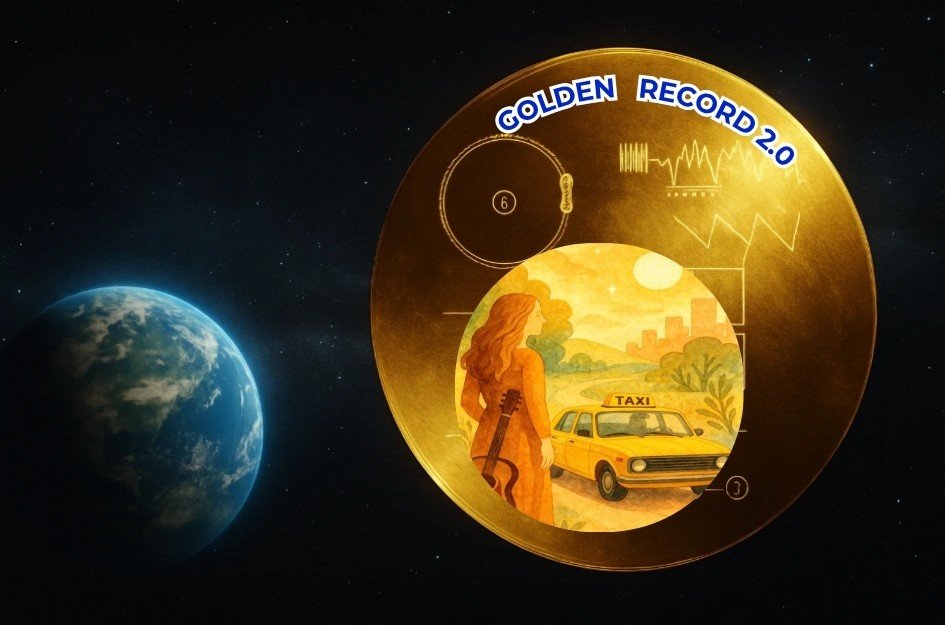
1977 Voyager 1 launches with the Golden Record — a message from Earth.
2025 Big Yellow Taxi remains a timeless anthem for climate and conscience.
Forever Young: Joni and Her Yellow Taxi
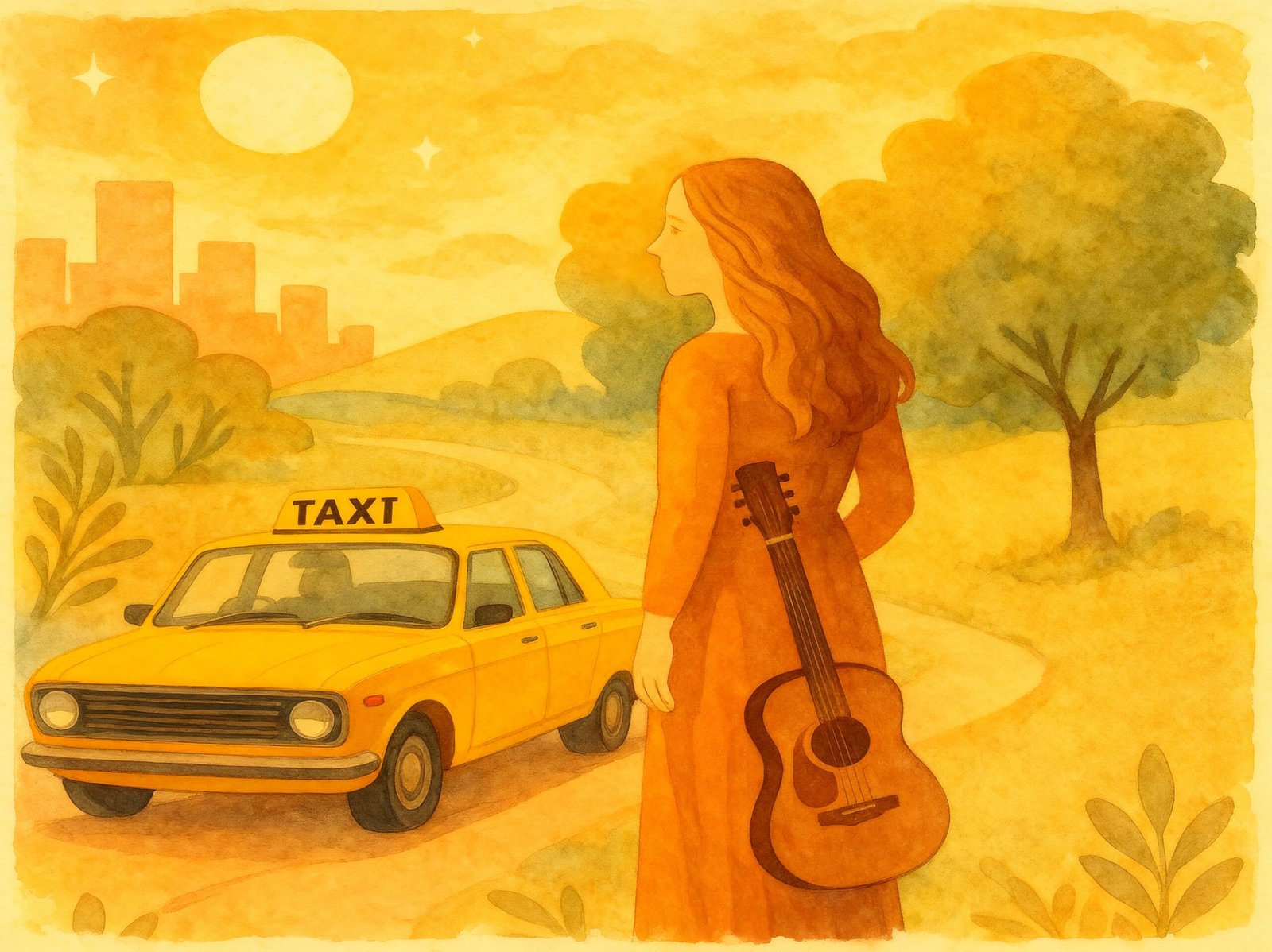
She painted emotions with words and turned music into watercolor — remains forever young in spirit, carried by the rhythm of her Big Yellow Taxi.
When she wrote that song in 1970, standing in Hawaii and looking at paradise “paved” for progress, she could hardly imagine how prophetic her words would become.
“They paved paradise and put up a parking lot” — a line that once sounded like a playful protest now echoes as a quiet global truth.
Joni’s Yellow Taxi was small at first, just a bright flash of melody warning about what humanity might lose in its rush to modernize. But the years have only made it grow — in meaning, in size, and sadly, in number. The “parking lots” have multiplied, the trees have been cut down, the rivers have been poisoned, and the oceans have been filled with microplastics.
And yet, Joni’s voice still rings with hope. Her song isn’t only about loss — it’s about awareness, the moment we realize that beauty cannot be replaced, that we “don’t know what we’ve got till it’s gone.”
A Golden Record of Humanity
If humanity ever launches a second Golden Record into the cosmos — a new message in a bottle, like Voyager 1 of 1977 — Joni Mitchell’s “Big Yellow Taxi“ deserves a place on it.
This song stands as one of Earth’s cultural statements, bridging art, conscience, and the fragile beauty of life on our planet. Since 1970, the song has never faded.
It embodies our capacity for reflection and humility. Unlike songs of triumph, Big Yellow Taxi expresses regret and hope. Its refrain, “Don’t it always seem to go that you don’t know what you’ve got till it’s gone,” tells any listener who we truly are: creatures capable of love, loss, and learning.
Sending this song into the stars would show that humankind, for all its errors, possesses the rare gift of conscience.
A civilization that sends “Big Yellow Taxi“ into space does not boast of its perfection — it admits its longing to do better.
A Song for the World’s Climate Summits
Long before climate data-filled charts and reports, Mitchell was singing about ecological fragility. Her art foresaw what science would later prove.
If there is one song that should echo through the halls of international climate summits — such as the recent one in Brazil — it is Big Yellow Taxi. Music can often reach hearts faster than policy ever can.
Relevance to the moment
Its imagery of “paved paradise“ and “tree museums“ mirrors the real struggles these summits confront: Amazon deforestation, urban expansion, and biodiversity loss. A song cannot change the planet — but it can change the way we see it.
Just as Lennon’s Imagine became the anthem of peace, Big Yellow Taxi could stand as the anthem of planetary care.
Big Yellow Taxi is not just a melody from another time. It is a prophecy that aged into wisdom.