The Discovery of Tutankhamun’s Tomb (1922)
Some moments in history remind us that the past never truly disappears—it only waits beneath the dust. The discovery of Tutankhamun’s tomb in 1922 was one such moment. What began as an archaeological expedition became a dialogue between worlds: between life and death, glory and decay, silence and rediscovery.
A Stairway to History
In the autumn heat of 1922, the Valley of the Kings lay silent—a place of golden sands and royal ghosts. Archaeologist Howard Carter, after years of fruitless searching, stood on the edge of losing his funding and his hope. His patron, Lord Carnarvon, was ready to call it off.
But the valley still held one last secret.
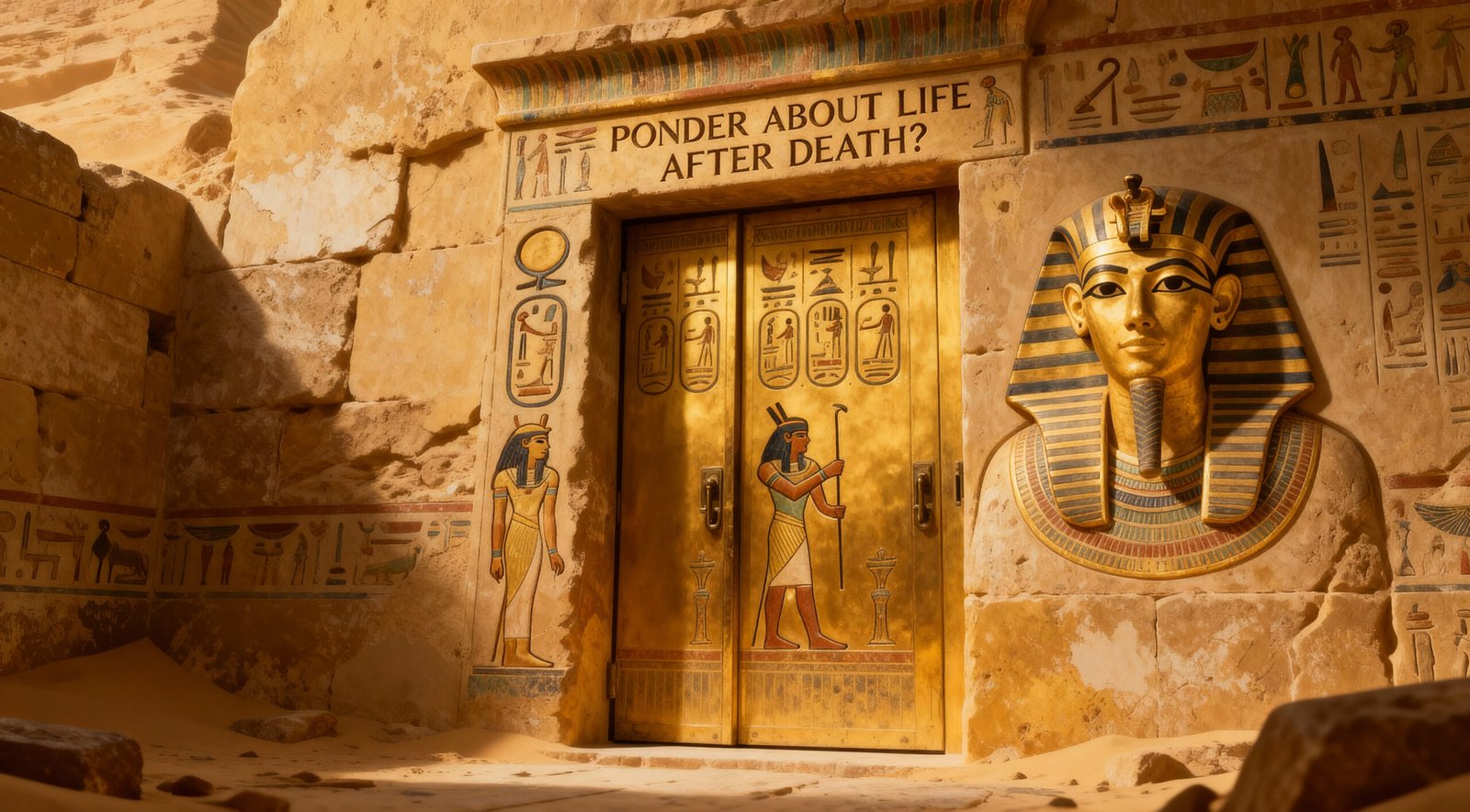
On November 4, 1922, one of Carter’s workers uncovered the top of a staircase buried beneath rubble near the tomb of Ramses VI. As the team cleared the steps, they found a sealed doorway stamped with the royal cartouches of an unknown pharaoh.
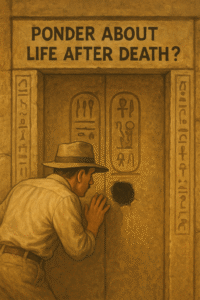
When Carter and Carnarvon finally peered inside through a small hole, Carnarvon whispered, “Can you see anything?”
Carter replied, his voice trembling with awe: “Yes, wonderful things.”
The Treasures Within
Behind that door lay a miracle of preservation. The tomb—designated KV62—was the only royal burial in the Valley of the Kings found almost intact. Inside were four small chambers, packed with over 5,000 treasures meant to guide a soul through eternity.
Among them gleamed:
- A golden throne, showing Tutankhamun and his queen in a moment of tender affection.
- Chariots, weapons, and musical instruments.
- Jewelry and amulets for protection in the afterlife.
- Three nested coffins, the innermost made of solid gold, encase the young pharaoh’s mummy.
And upon his face rested the golden mask, now one of the most recognized symbols of ancient Egypt.
The Boy Who Became a God
Tutankhamun ruled Egypt more than 3,300 years ago, from 1332 – 1323 BCE. Crowned at just nine years old, he reigned for less than a decade before dying suddenly around the age of nineteen.
Just imagine a young man.
He was about 1.67 meters (5 ft 6 in) tall.
He had a slight clubfoot and other health issues.
DNA tests suggest he suffered from malaria and came from a family line burdened with genetic disorders, likely caused by royal inbreeding.
And yet, he was believed to be the living image of the god Amun.
At least, his name Tuttanhamun said so.
He wasn’t twice taller, stronger, or more handsome than others — but what set him apart was his wealth and power. Thousands of laborers toiled to create treasures, build his mausoleum, and increase his glory.
Unlike ordinary mortals, he had to be prepared for eternity.
In his afterlife, he was expected to stand close to his deity, Amun.
And if Amun owned the universe, imagine the splendor required to stand before him.
King Tut had to be ready — not as a poor mortal, but as a radiant soul wrapped in gold, worthy of divine company.
The Curse and the Craze
The world was spellbound by the discovery. When Lord Carnarvon died soon after from an infected mosquito bite, rumors of a “Curse of the Pharaoh” spread like wildfire. Newspapers told tales of vengeance from beyond the grave.
The truth was more ordinary—but the legend added irresistible allure. “Tutmania” swept across the globe, inspiring fashion, jewelry, films, and dreams of ancient glory.
The Eternal Silence
Tutankhamun’s tomb was the final great mystery of the Valley of the Kings. Howard Carter’s discovery brought him eternal fame, but the young pharaoh himself remained silent. No voice, no inscriptions, and no whispers emerged from the gold and shadows to reveal whether all his preparations had been successful. He dedicated much of his short life to ensuring a perfect afterlife, yet the question remains:
Was it worth it? Did he achieve the eternity he sought?
All those preparations for the afterlife—did they truly help?
There’s no evidence from the late pharaohs and great emperors to suggest it did. Did they ever use their treasures? Did they gain any profit from their investments in eternity? They remain silent.
What we do know is this: all the treasures found by Howard Carter remain here on Earth. The same fate awaits every hoard hidden in royal tombs and mausoleums—unless it is looted by others. Even those who steal or buy these relics are haunted by the same thought: how to buy a stairway to heaven.
Through the ages, the story repeats itself. Some people possess unimaginable riches—treasures, assets, billions of dollars in their accounts—and yet their lives are far too short to spend them. Their wealth could sustain them for thousands of years, and still, they cannot take it beyond the final threshold.
In the end, the pharaohs, the emperors, and the billionaires all remain silent.